
Who Can Certify a Document? A Complete Guide
You are asked to provide a certified copy of an important documents.
Who is qualified to certify these documents?
This guide explains who can certify a document and what the process involves.
What Does It Mean to Certify a Document?
Certification confirms that a photocopy of a document is a true copy of the original.
This allows you to use the copy when you don’t want to send the original document.
For example, when opening a bank account, to identify you. A bank asks that you present your passport.
It’s not safe or practical for you to do this.
Instead, you can certified copy. The bank can use this to satify their KYC requirements.
Who Can Certify a Document?
The professional person certifying your document must be someone in a trusted professional role or an official authority.
According to GOV.UK, the following people can provide a document certification service:
- Bank officials
- Councillors
- Religious ministers
- Dentists
- Chartered Accountants
- Solicitors or notaries
- Teachers or lecturers
- Social workers
As long as the person is not related to you, living at the same address or in a relationship with you
Who can really Certify a Document?
In reality it will depend on the institution with whom you are dealing with.
The institution will set out their own criteria. They will probably have a list of accepted professionals to certify documents.
Here’s an alternative and more realistic list of professionals who you can call upon.
- Notary Public
- Solicitor
- Bank or building society official
- Post office official
- Accountant
- Surveyor
- Doctor
- Justice of the Peace
- Police Officer.
- Member of Parliament (MP)
If you need help, give us a call now on +442074992605 or email us on notary@notarypubliclondon.co.uk
‘How to guide’ to certifying a document
What must a certifier do?
A certifier must:
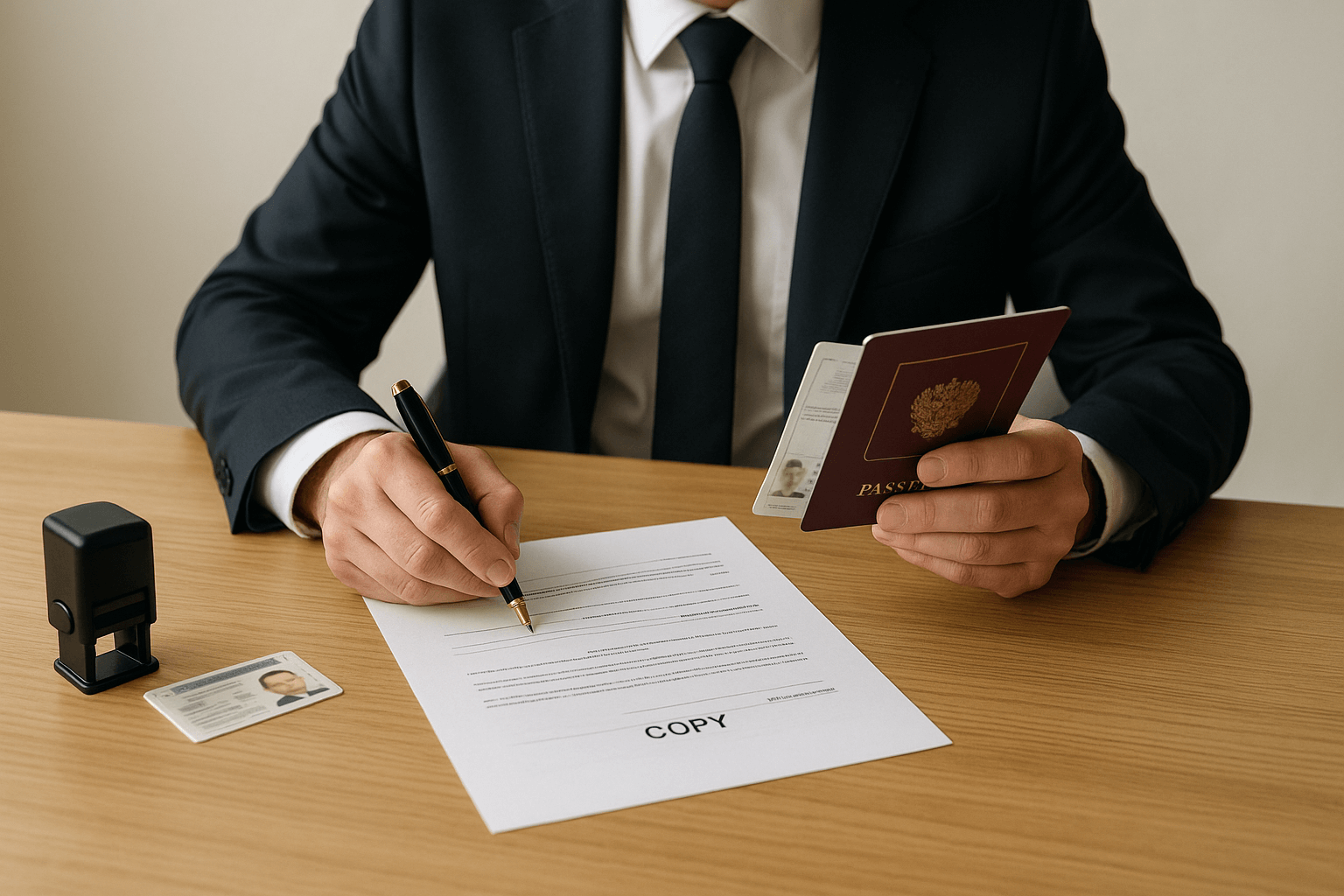
- Compare the original document with the photocopy.
- Confirm it is a true copy by writing the following on the copy:
“Certified to be a true copy of the original document” or ‘I certify that the document is a true and accurate copy of the original”.
3. Include their:
- Full name and signature
- Date of certification
- Contact details (phone number or email)
- Job title (e.g., Notary Public, Chartered Accountant)

What about Photo ID?
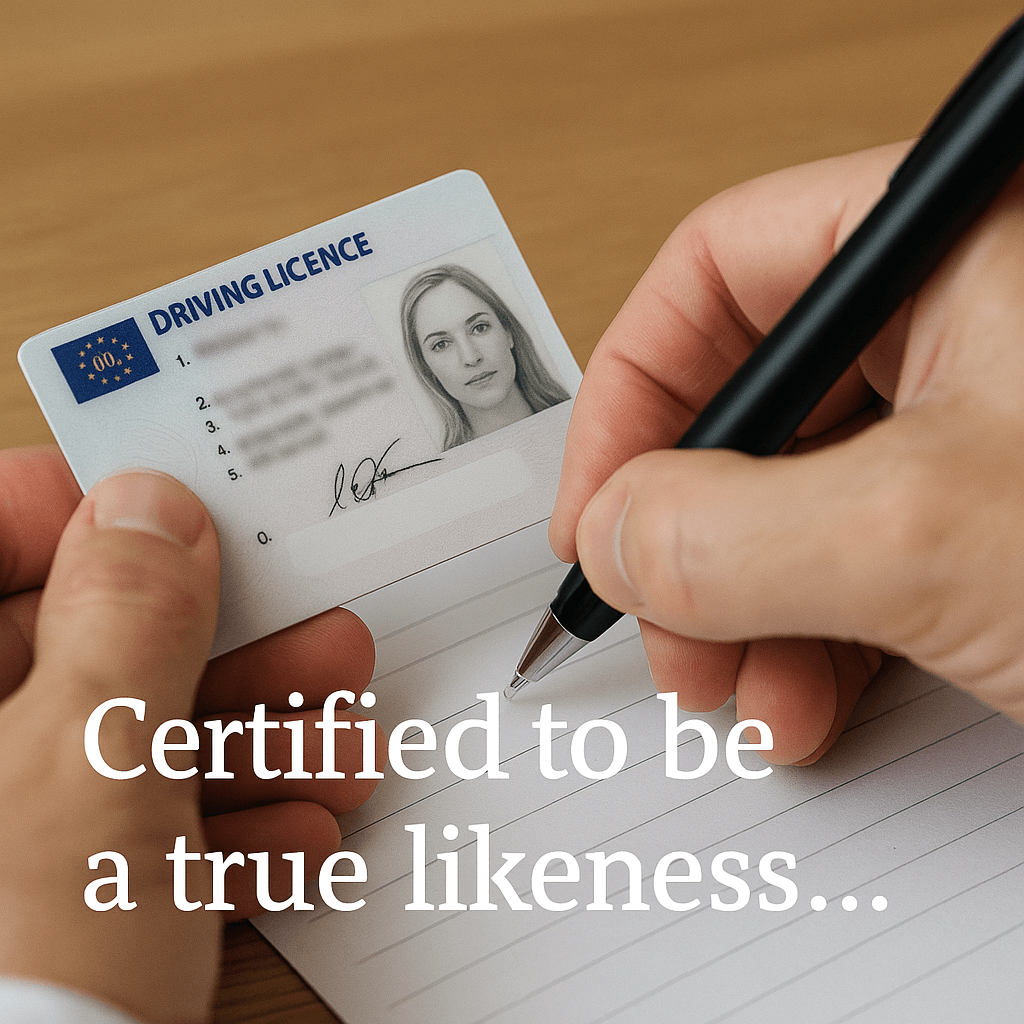
For photo ID documents like passports or driving licences which have a photocard, the certifier may also need to confirm that the photo is a true likeness of the person.
So they should do 1-3 above but also provide an additional statement:
“Certified to be a true copy of the original document sighted by me and I certify that the photograph is a reasonable likeness to the bearer”.
What if there are multiple pages?
If there are multiple pages then the certifer should either
1. Certify every page
2. State in the first page that he or she is certifying x number of pages and then go on to sign and number each page; or
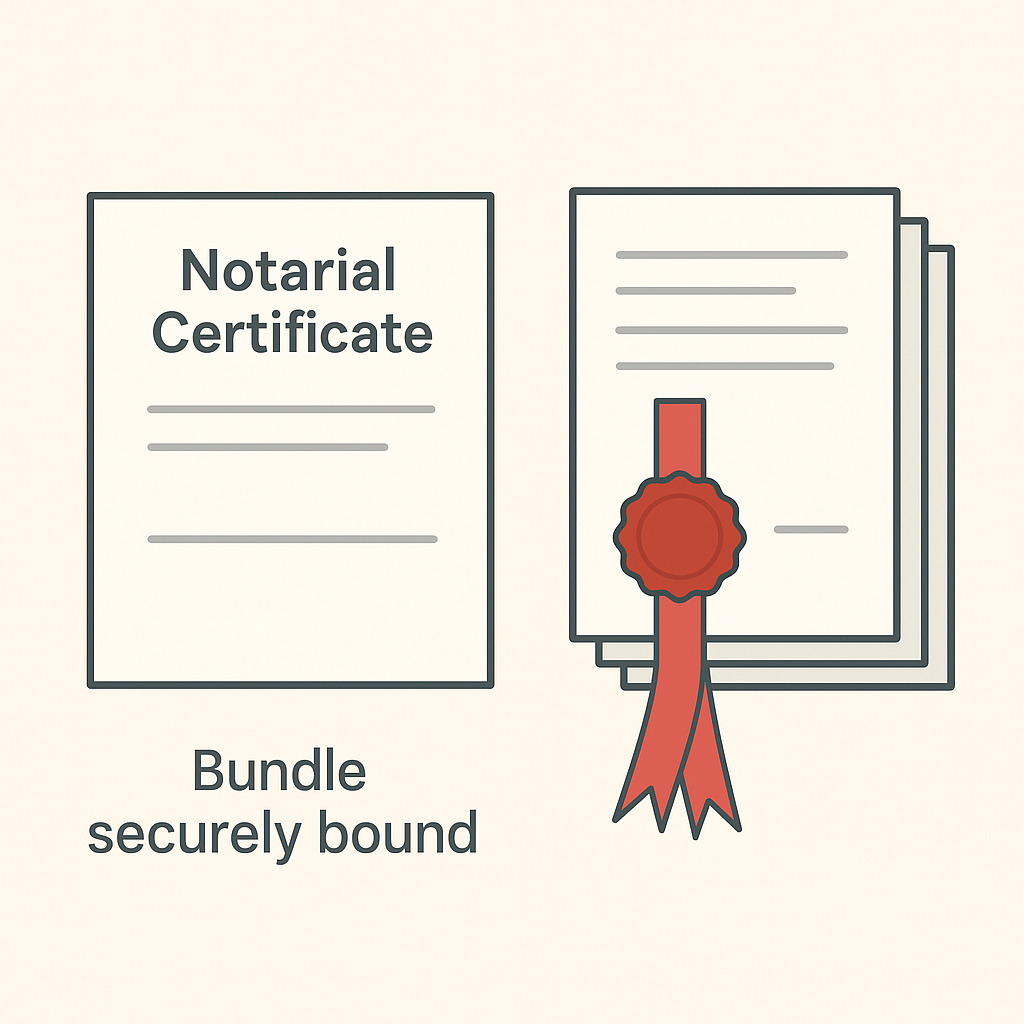
3. Make a statement saying that he or she is cerifying the pages annexed as true copies and then securely bundle the pages together in a tamper proof way. For example, notaries use this method by using ribbon to bind the bundle and an embossed seal.
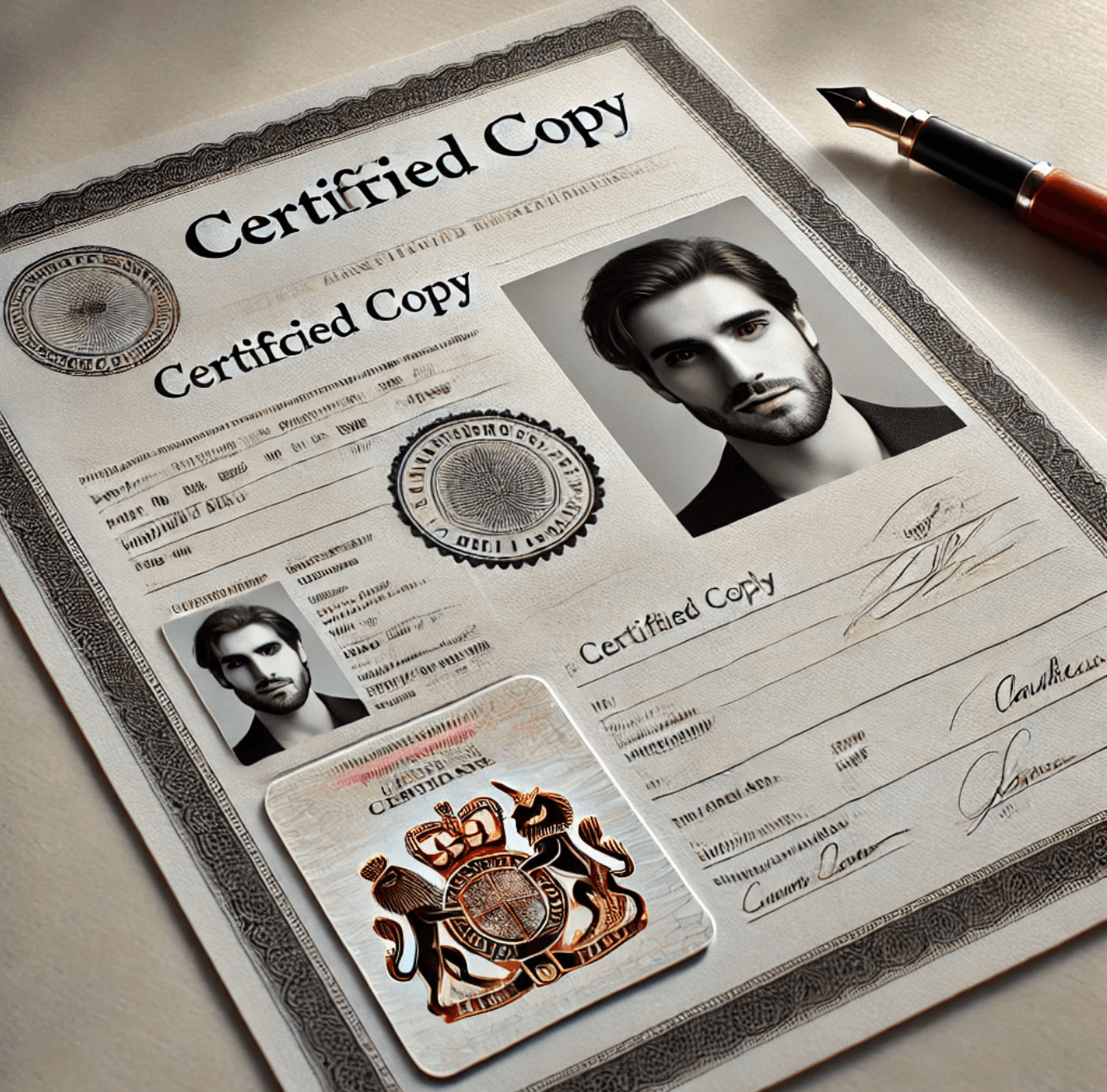
Documents That Often Need Certification
Common documents that require certification include:
- Personal identification – Passport, driving licence
- Legal papers – Birth, death, and marriage certificates
- Financial records – Bank statements, credit card statements
- Household bills – Utility bills, council tax bills
- Official authorizations – Power of attorney, legal agreements
What if you have been asked for an original document but you don’t have the original?
KYC has been slow to move on as technology has changed our way of life.
Traditionally ‘Proof of Address’ documents have been requested.
Examples of these are utility bills and bank statements.
But these are now held online in electronic form.
So how does one go about certifying a true copy of an online electronic bank statement or utility bill?
The way to do this is to show the certifier the source of the electronic document by logging into the platform where the document is stored.
For example your banking app or utility provider app and navigate to where pdfs of your accounts and statements are stored.
Notary Public Services London in a Convenient Location
Using Notaries to Certify Documents
If you are dealing with a matter overseas, you may be asked for notarisation, or a notarised copy of a document.
This is a certified copy performed by a Notary Public.
Notaries are types of lawyers and are internationally utilised and recognised in this role.
Most countries in the world have a notary profession. So for that reason notaries are preferred for international certification.
Spain, France and the United States for example, have notaries, but not solicitors. The UK have solicitors and notaries. So it makes sense that a notary is called upon in international matters.
How do notaries notarise documents.
Notaries will either produce a Notarial Certificate which is a cover sheet which will set out their certification.
They will then bind the copies to the Notarial Certificate with ribbon and seal it under a seal and then put on their Notary Seal.
A notary seal is a unique seal embossment which is unique to every notary in the UK.
Do I need an Apostille?
An Apostille is a certificate from the UK Government confirming that the signature of a public official is genuine. If you are asked to get an Apostille, it will ceritfy that a UK notary public has signed the document. You can visit our Apostille Service page for more details.
If you are in any doubt, ask the person who requested the certified copy as to whether or not an Apostille is needed.


What if you need a certified copy and you are based outside the UK?
If you cannot bring the original to us, you can send it by secure courier.
And then make arrangements with us to return the original and certified copy back to you using secure courier.
If you can provide us access to a secure portal which contains a PDF of an electronically generated document (such as a bank statement) then we may be able to produce a certified copy of a document using the portal.
Or you may be able to ask the institution who provided the original to you to send us confirmation that a scan is a true copy. We assess this on a case, by case basis.
Conclusion
As with anything in life, there is loads of general guidance all over the internet.
Best practice is you find out what the institution requesting the certification needs. And who they accept as a professional certifier.
This will help you avoid delays and wasted costs.
It will ensure your documents are accepted without issue.
Always double-check the specific rules before submitting a copies of documents or a certified document.
Still have questions? Or would you Like to start the conversation?
If you need the services of a notary, give us a call on +442074992605.
Email us notary@notarypubliclondon.co.uk.
Or complete the form opposite and we will guide you through the process.